

Everest Base Camp established …. now for the rest of the mountain
Everest Base Camp established …. now for the rest of the mountain
Oh gosh and for fuck’s sake etc …. I don’t have much furniture but after 26 years in one place … do acrew stuff. Like nearly 50 years of photography. Negs, slide, prints and the filing & records. Books, pictures and, and , and ……


This is next …… !!

Sorry for the interruption of my online services 🙂 But I’m moving house and EVERYTHING is going into carboard boxes.
My son Sam and his partner Becca are coming up to Nottingham to give me a hand with all this. I have been at my address on the Woodborough Road for 26 years so, really about time i had a new horizon innit!

Right. That’s the Christmas tree and decorations done.
Please note the festive blutak!
Armed Nottinghamshire Police Officers on patrol at the Christmas Market, Market Square in Nottingham.


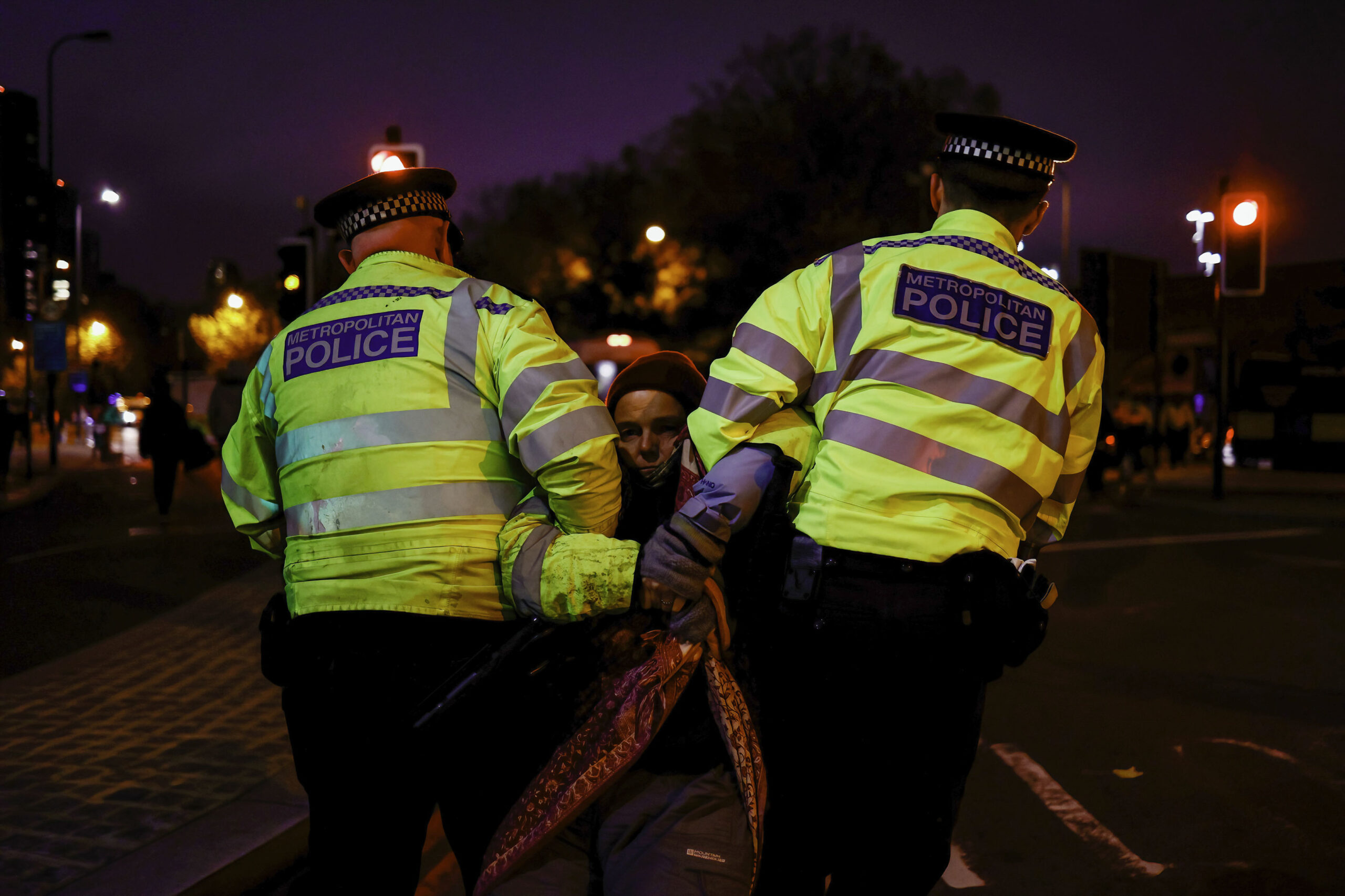
The government is currently trying to bypass basic parliamentary scrutiny by adding 18 pages of amendments to a bill that has already made its way through the House of Commons. The last-minute changes, tabled in the House of Lords by an unelected peer, will not be scrutinised line by line in the usual manner. Instead, they will be rushed through without proper debate.
Perhaps it is appropriate that this bill passes in such an egregious, anti-democratic way. The police, crime, sentencing and courts bill has been described by various human rights groups as a serious threat to democracy. It was already stuffed full of legislation intended to criminalise protest and intimidate campaigners. It gave police the ability to shut down protests for causing “serious annoyance” or for being “too noisy”. It also threatened Gypsy, Roma and Traveller communities. Now the bill is back in parliament – and it’s looking even worse.
The government is trying to add a whole suite of offences that, if passed, will criminalise protest even further. Under these new proposals, activists could be imprisoned for obstructing roads and blocking printing presses. They could be banned from using the internet to organise protests. The amendments also include a proposal to allow police officers to stop and search people without grounds for suspicion – and with anyone trying to obstruct such a search liable to receive up to 51 weeks in prison.
Not content with the dangerous and discriminatory #PolicingBill that sparked months of #KillTheBill demonstrations, the Government’s latest additions somehow make the Bill even worse.
We break them down below
⬇️⬇️⬇️— Liberty (@libertyhq) December 1, 2021
One of the most controversial proposals is the introduction of ‘serious disruption prevention orders’, which can be imposed with or without a conviction. These orders can be used on anyone who has been to two or more protests in the last five years. Whether you marched over racism, climate change or Brexit, everyone is at risk – providing, of course, that the protest you attended was “likely to cause serious disruption”, as all effective protests are. If you meet the criteria, the police will be able to prevent you from being with certain people, going to certain places, and carrying certain items. Want to tell your friends about a protest on Facebook? Forget it.
Under the new bill, the home secretary will advise the police on how and when to implement these orders. They will also be able to define what “serious disruption” means with regard to all of these offences, handing sweeping powers to the government of the day. The current home secretary Priti Patel has repeatedly tried to break international and domestic law, and is now introducing legislation to strip naturalised UK citizens of their citizenship. Should she really have the power to ban people from attending protests? Should anyone have such power?
Another proposal is to criminalise ‘locking on’, a tactic that has been used by peaceful protesters for centuries. This proposal will make it an offence to “attach” oneself to another person, an object, or to attach an object to another object during a protest. Does that make sense? It better do, because it will also carry a maximum sentence of 51 weeks in prison.
Home Office minister Baroness Williams of Trafford has said these measures are necessary in order to “protect the public from unacceptable levels of disruption”, pointing the finger at “reckless and selfish” activist groups like Extinction Rebellion and Insulate Britain. Her boss, Priti Patel, has also described protesters who chain themselves to buildings, like the suffragettes did in the early twentieth century, as “selfish” and “criminal”.
The final amendment to the bill, rushed through at the very last moment, makes protesting outside train stations, airports or oil refineries an offence. The government came up with this idea last year, after climate activists blocked two printing presses owned by Rupert Murdoch – an act of peaceful protest described by Patel as an “attack on capitalism”. This new offence criminalises any protester that “interferes with the use or operation of any key national infrastructure”, and carries a maximum sentence of one year in prison. Tellingly, both printing presses and oil pipelines are now deemed to be “key national infrastructure”.
“Rupert Murdoch is the media wing of the fossil fuel industry”@AyoCaesar explains why the @ExtinctionR newspaper blockade is both symbolically and practically important.#TyskySour pic.twitter.com/IJXILoXiog
— Novara Media (@novaramedia) September 8, 2020
The government has, of course, tried to avoid scrutiny at every turn. The bill, which is over 300 pages long, was voted through the House of Commons just six days after publication. There has not been time to properly consider or scrutinise it. The wording is vague and ill-defined. Many of the offences effectively include all acts of protest.
There is a possibility, of course, that these amendments won’t pass through the House of Lords. Baroness Williams was previously forced to withdraw the amendments after outrage from her colleagues – but she has now tabled them again. Williams, notably, is hardly a great champion of democracy: she ran for election and was rejected by the electorate twice, before being given a life peerage by David Cameron in 2013.
When the bill was read in the House of Commons in the summer, the MP for Swansea West Geraint Davies described it as “an act of political treason”. He argued: “People in this country should not rest until it is overturned and our rights reinstated, so that democracy can live, breathe and thrive again”. The bill is now even worse – and he is still absolutely right.
Who cares about democracy, anyway? That’s the question we all need to ask ourselves. The government certainly doesn’t. The Labour party is hardly much better. If opposition is going to come from anywhere, it will come from the people. Now, the most realistic way to defeat this draconian piece of legislation is to make it unworkable. That means mass mobilisations, rolling demonstrations and direct action. The power of protest is going to have to defend the right to protest. And it’s going to take all of us.
Sam Knights is a writer, actor and climate activist.
On Wednesday 8 December at 5pm there will be a protest against the police bill outside the House of Lords. For more information, or to organise your own protest, click here.
This briefing comes from a broad coalition of civil society organisations, including faith groups, democracy and human rights campaigners, and environmental activists.
The Police, Crime, Sentencing and Courts Bill would significantly limit the right to protest, which is an essential part of democracy. It would criminalise the lifestyle of Gypsy and Traveller communities and have unintended consequences for homeless people and those wishing to enjoy access to the countryside.
Former and current Police Chiefs have strongly criticised this Bill. Earlier this summer a group of former officers, including a former chief constable and a chief superintendent, wrote to the Home Secretary. Their letter highlighted how the Bill could lead to the policing being “instrumentalised for political purposes”.
On Part 3 of the Bill, former Chief Constable of Durham Constabulary Mike Barton told the Independent in March: “Fortunately, in the UK we are not a paramilitary-style police force. But these powers dangerously edge in that direction. Police chiefs will be seen as the arbiters of what is and is not allowed when it comes to protest.” On Part 4, Assistant Commissioner Martin Hewitt, Chair of the National Police Chiefs’ Council, told the Bill Committee in May that “the fundamental problem is insufficient provision of sites for Gypsy Travellers to occupy” and that existing legislation is sufficient.
Key points
Part 3 of this Bill is an existential threat to a core purpose of protest, silencing ordinary people who already feel unheard by decision-makers. It creates confusion and makes protest difficult to organise and difficult to police. It gives police officers responsibility for implementing laws which contradict and suppress freedom of assembly and freedom of speech. It is a serious threat to our democratic rights as citizens.
Part 4 introduces a new criminal offence of trespass, with powers to imprison, fine and seize the vehicles/homes and possessions of individuals who have the intent to reside on land without authorisation. This is a disproportionate and potentially unlawful interference with the rights of Gypsy and Traveller communities, as well as capturing those who are homeless or wild camping.
While this briefing focuses on Parts 3 and 4, it must be noted that other parts of the Bill are also extremely problematic. Concerns about Parts 2 and 10 can be found in briefings from the Criminal Justice Alliance, Amnesty International UK, Liberty, and others.
Part 3
Part 3 undermines democracy by severely limiting freedom of speech.
Clauses 55, 56, and 57 provide the police with the powers to restrict protest to the point of suppression. While police officers can currently place conditions on the size, place and duration, this legislation expands these to include the protest:
The responsibility for implementing these confusing and unclear conditions will lie with police officers – meaning that police officers will need to make snap decisions on the right to free assembly and freedom of expression. To add to the vagueness, the Secretary of State will be given the power to change the definition of “serious disruption” in Secondary Legislation.
The result is that police officers will be able to severely restrict a protest in anticipation that its noise might have an impact on the organisation or decision-makers it’s directed at, or on passers-by, thus making the protest effectively pointless.
The Bill will also lower the threshold for prosecution to what the individual “ought to have known”, rather than knowingly breaching conditions imposed on the protest. As additional conditions can be imposed by police officers, this presents individuals attending a protest with the task of second guessing what police officers might decide at any given moment. The punishments for breaching these police conditions will be disproportionate: increased
fines for individuals attending a protest, and jail time for organisers increased from three months to eleven months.
Clauses 58 and 59 create an extended buffer zone around Parliament, while clause 61 makes it possible to place conditions on protests by a single individual based on noise.
Clause 60 places an offence of intentionally causing a “public nuisance” in law, where non-violently causing serious annoyance or inconvenience will carry a maximum sentence of 10 years. Such a wide ranging and catch-all offence is left open to interpretation, confusing both for those wishing to peacefully protest and those seeking to implement the new law. The Joint Committee on Human Rights (JCHR) has called for Articles 10 and 11 to be specifically included as a defence in these cases.
Part 4
Part 4 attacks the way of life for many Gypsy and Traveller communities, as well as potentially criminalising homelessness and those using the countryside (such as ramblers or cyclists or people who are wild camping). The Bill creates new criminal offences and extends existing eviction powers in the Criminal Justice & Public Order Act 1994 (CJPOA).
Clauses 62-64 create a new offence of residing or intending to reside on land with a vehicle without the consent of the occupier of the land where a person caused or is likely to cause “significant disruption, damage, or distress”. This includes the power to seize someone’s home/vehicle, a fine of up to £2500 and/or a custodial sentence of up to three months, and an increase in the period in which trespassers directed away from the land must not return to it, from three to twelve months.
The Bill does not define behaviour which causes or is likely to cause “significant disruption, damage or distress”. Distress can arise from stereotypes and prejudices, meaning that the mere existence of Gypsy and Traveller communities or of other homeless people could potentially be enough to trigger this legislation. As Shelter have pointed out, under this legislation a homeless person could potentially be criminalised for sleeping in their car on a public road on the grounds that it is causing distress to nearby residents. The Bill also gives new powers to the private individual: under the new offence, a person can be criminalised for disobeying the instruction of a private citizen whose interest could be underpinned by prejudice or a misguided understanding of the legislation.
Part 4 seeks to enact the manifesto commitment to strengthen powers against encampments. However, this Bill misdiagnoses the root problem, as encampments are often the direct result of insufficient site provision and stopping places. Trapping people in a cycle of eviction and criminalisation will not create more places to camp. Allowing police to impound vehicles which are family homes will lead to serious hardship for entire families, including children. Evidence is clear that Gypsies and Travellers who have nowhere to lawfully stop face particularly high problems in terms of low life expectancy, high maternal mortality rates and low educational attainment. The Joint Committee on Human Rights outlined how the measures in Part 4 “gives rise to several human rights concerns”.
These powers are neither necessary nor desired, as indicated both by police evidence to the Bill Committee in the House of Commons and research from Friends, Families and Travellers.
Criminalising trespass will also have an impact on those seeking to enjoy the countryside. The terms ‘vehicle’, ‘reside’ and ‘intent to reside’ are defined so broadly that the legislation could be used to criminalise cyclists who are wild camping or people who have driven to access green space. As Cycling UK have noted, a vehicle does not have to be suitable for use on the road and/or even have wheels. It is an extreme and unnecessary attack on ancient freedoms to access and enjoy the countryside.
Manifesto commitments
The 2019 Conservative Manifesto contained commitments to make intentional trespass a criminal offence, and to strengthen powers against Gypsy and Traveller camps. It also made a commitment to increasing prison places and to reforming prison sentences. The manifesto mentioned empowering the police, and referred to extremism in relation to terrorism.
The comments made by current and serving senior police officers clearly demonstrate that this legislation will not address the underlying causes of encampments, indicating that this is not a viable legislative route. Part 4 of the Bill also has an impact beyond the manifesto proposals.
No suggestions on protest or the right to free speech were made in the manifesto. The Home Secretary has repeatedly said that the legislation is not intended to threaten or curtail protest. However, the current draft of the legislation purposefully uses vague terms (some of which can be later defined by the Secretary of State) and creates protest conditions which could change in a very short space of time. This neatly deters organisers and suppresses both large and small protests.
Opposition to the Bill
Civil society organisations representing many different groups across the UK have spoken out against the Police, Crime, Sentencing and Courts Bill. When the Bill was first announced a coalition of 250 organisations joined forces to condemn the Bill – a coalition which is now 350 groups and continues to grow. Some of the signatories represent outdoor sport and countryside groups concerned about the trespass powers in Part 4, while others are democracy campaigners opposed to the weakening of our ability to protest. They are joined by campaigners on human rights, environmental activists, and faith-led organisations.
The response from the wider public has demonstrated that this concern is not limited to organisations: more than 600,000 people signed a petition opposing the Bill and 700 legal academics urged the government to rethink the Bill.
The Joint Committee on Human Rights said in June that the Bill would increase restrictions “on non-violent protest in a way that we believe is inconsistent with our rights”, and specifically called the introduction of a trigger of serious disruption “unacceptable”, calling for the Bill to be amended.
Further information
Christian Aid: It Is Better To Protest Than Accept Injustice
European Center for Not-for-Profit Law: Briefing April 2021
Liberty: Briefing July 2021
Friends, Families, and Travellers: Links to research, Briefing August 2021
Friends of the Earth: What’s wrong with the Policing Bill? (podcast)
Shelter: Letter on criminalisation of people for being homeless
Quakers in Britain: Now is the Time to Act, Why Protest Shouldn’t be Prevented

The government’s back-door amendments to the policing bill are tyrannical. We should be on the streets in our millions

Wed 1 Dec 2021 06.00 GMT
This is proper police state stuff. The last-minute amendments crowbarred by the government into the police, crime, sentencing and courts bill are a blatant attempt to stifle protest, of the kind you might expect in Russia or Egypt. Priti Patel, the home secretary, shoved 18 extra pages into the bill after it had passed through the Commons, and after the second reading in the House of Lords. It looks like a deliberate ploy to avoid effective parliamentary scrutiny. Yet in most of the media there’s a resounding silence.
Among the new amendments are measures that would ban protesters from attaching themselves to another person, to an object, or to land. Not only would they make locking on – a crucial tool of protest the world over – illegal, but they are so loosely drafted that they could apply to anyone holding on to anything, on pain of up to 51 weeks’ imprisonment.
It would also become a criminal offence to obstruct in any way major transport works from being carried out, again with a maximum sentence of 51 weeks. This looks like an attempt to end meaningful protest against road-building and airport expansion. Other amendments would greatly expand police stop and search powers. The police would be entitled to stop and search people or vehicles if they suspect they might be carrying any article that could be used in the newly prohibited protests, presumably including placards, flyers and banners. Other new powers would grant police the right to stop and search people without suspicion, if they believe that protest will occur “in that area”. Anyone who resists being searched could be imprisoned for – you guessed it – up to 51 weeks.
Existing stop and search powers are used disproportionately against Black and Brown people, who are six times as likely to be stopped as white people. The new powers would create an even greater disincentive for people of colour to protest. Then the media can continue to berate protest movements for being overwhelmingly white and unrepresentative.

Perhaps most outrageously, the amendments contain new powers to ban named people from protesting. The grounds are extraordinary, in a nation that claims to be democratic. We can be banned if we have previously committed “protest-related offences”. Thanks to the draconian measures in the rest of the bill – many of which pre-date these amendments – it will now be difficult to attend a protest without committing an offence. Or we can be banned if we have attended or “contributed to” a protest that was “likely to result in serious disruption”. Serious disruption, as the bill stands, could mean almost anything, including being noisy. If you post something on social media that encourages people to turn up, you could find yourself on the list. Anyone subject to one of these orders, like a paroled prisoner, might be required to present themselves to the authorities at “particular times on particular days”. You can also be banned from associating with particular people or “using the internet to facilitate or encourage” a “protest-related offence”.
These are dictators’ powers. The country should be in uproar over them, but we hear barely a squeak. The Kill the Bill protesters have tried valiantly to draw our attention to this tyrant’s gambit, and have been demonised for their pains. Otherwise, you would barely know it was happening.
Protest is an essential corrective to the mistakes of government. Had it not been for the tactics Patel now seeks to ban, the pointless and destructive road-building programme the government began in the early 1990s would have continued: eventually John Major’s government conceded it was a mistake, and dropped it. Now governments are making the greatest mistake in human history – driving us towards systemic environmental collapse – and Boris Johnson’s administration is seeking to ensure that there is nothing we can do to stop it.
The government knows the new powers are illegitimate, otherwise it would not have tried to avoid parliamentary scrutiny. These brutal amendments sit alongside Johnson’s other attacks on democracy, such as the proposed requirement for voter ID, which could deter 2 million potential electors, most of whom are poor and marginalised; the planned curtailment of the Electoral Commission; the assault on citizens’ rights to mount legal challenges to government policy; and the proposed “civil orders” that could see journalists treated as spies and banned from meeting certain people and visiting certain places.
So where is everyone? Why isn’t this all over the front pages? Why aren’t we out on the streets in our millions, protesting while we still can? We use our freedoms or we lose them. And we are very close to losing them.
PCSO giving it large with ozymusicc Osaze Aigbe regular karaoke session in Nottingham
His TikTok live streams at : https://www.tiktok.com/@ozymusicc
Samsung S10 4K Video 3840 x2160
Kill the Bill Speeches #killthebill
all now halfway through Committee Stage in the House of Lords
https://bills.parliament.uk/bills/2839/stages/15740
Will be having work in this, next year ::
Radical Landscapes (Tate Liverpool, 5 May – 4 September 2022)
https://www.tate.org.uk/press/press-releases/tate-announces-2022-exhibition-highlights
Tuesday, 02 November 2021
Hello
I have just received a message to say that content had been removed on ‘harassment and bullying grounds
‘https://www.tiktok.com/@tash_uk/video/7025650631973162245
I ask you to review this since this is not so.I am a photographer and practicing photo-journalist. A member of the National Union of Journalists.
The scene described is the action of a police officer making an arrest. It was a newsworthy record of events that afternoon.. Nobody is targeted and there is no directed ‘harassment and bullying’ ..
The object of the video is to question the lawful actions of a police officer in making an arrest. Surely that is permissible in a democratic society.
Regards
Alan Lodge
APPEAL SUCCESSFUL :: video now restored

This is the first TikTok video to make 50k views since i started
https://www.nuj.org.uk/resource/nuj-scotland-welcomes-journalists-covering-cop26-in-glasgow.html
The union has provided guidance to members covering the conference and climate emergency demonstrations.
The NUJ has provided advice on reporting public order events, and will continue to support members throughout the fortnight. The union is also working closely with Police Scotland.
If you are not a member of the union, you might like to consider what you will do if you are arrested, or even charged. You can read here how the NUJ recently assisted a photographer member who was arrested unlawfully.
If you wish to talk to a NUJ official about the benefits of union membership, feel free to contact us on nujscotland@nuj.org.uk
NUJ members covering the climate change conference need to plan accordingly and take appropriate health and safety precautions. Our guidance document gives health and safety tips, advice when dealing with the police and emergency legal numbers to ensure those covering the event feel prepared, safe and supported.
Always carry your UK National Press Card (UKPCA)/for Ireland NUJ Press Card in an accessible place and use it to identify yourself. Ensure you are protected by adequate insurance and conduct your own risk assessment before working. Make sure you have your NUJ membership number (not press card number) to hand if you need support from the union or Thompsons solicitors.
Always carry a copy of the NUJ’s and Thompsons solicitors emergency phone number in case you need help. Thompsons operate a 24-hour emergency number for work-related criminal matters. THOMPSONS SOLICITORS SCOTLAND ON 07718 416 084.
The NUJ held a briefing meeting for members and Police Scotland (PS). Steve Smith, head of news PS, said that if journalists become the target of protesters and are assaulted, the police will take action. He said: “If the media wants to report problems with the way police officers have behaved, they should call 01786 896000.”
There will be 10,000 police on operation and will be abiding by Police Scotland rules. Chris Starr, head of communications Police Scotland, said kettling was not used by PS. He said: “Our whole approach is based upon human rights and people’s right to protest and our aim is to be as friendly, open and transparent as possible in our dealings with the press and public.” PS statement
Police liaison officers can be recognised in their light blue tabards and are there to help facilitate peaceful protests and protect the safety of everyone involved.
Useful info & numbers
Police Scotland (PS) can be contacted on NewsDesk@scotland.pnn.police.uk & 01786 896000. This is a 24-hour service during COP26. Follow police reports on Twitter @PoliceScotland. Previous briefings and content published by Police Scotland. Website for latest news.
Glasgow City Council’s COP26 team has produced a series of bespoke media resources to assist press and broadcasters.
A Destination Media Hub will be at 40 John Street, G1 1JL, within the COP26 host city zone. It will operate daily from 9.00 to 19.00 from Thursday 28 October to Friday 12 November and is open to all COP26 accredited media and non-accredited media on presentation of their bona fide press credentials.
COP26 home page. Twitter @COP26
Information on roads and rail, follow Transport Scotland @trafficscotland
GetReadyScotland info on traffic, travel and road closures
Glasgow City Council: COP26Media@glasgow.gov.uk
UK Government: Cop26media@cabinetoffice.gov.uk
Stop killing civilians! Sudanese security forces shot dead two people Saturday during mass protests against the country’s recent military coup, a doctors’ union said. The shootings came despite repeated appeals by the West to Sudan’s new military rulers to show restraint and allow peaceful protests. Thousands of Sudanese have taken to the streets, where whistles and drums accompany chants of “revolution, revolution” in protest of this week’s coup, which is threatening to derail the country’s fitful transition to democracy. Pro-democracy groups had called for protests across the country to press demands for re-instating a deposed transitional government and releasing senior political figures from detention.
 Tash on YouTube

